
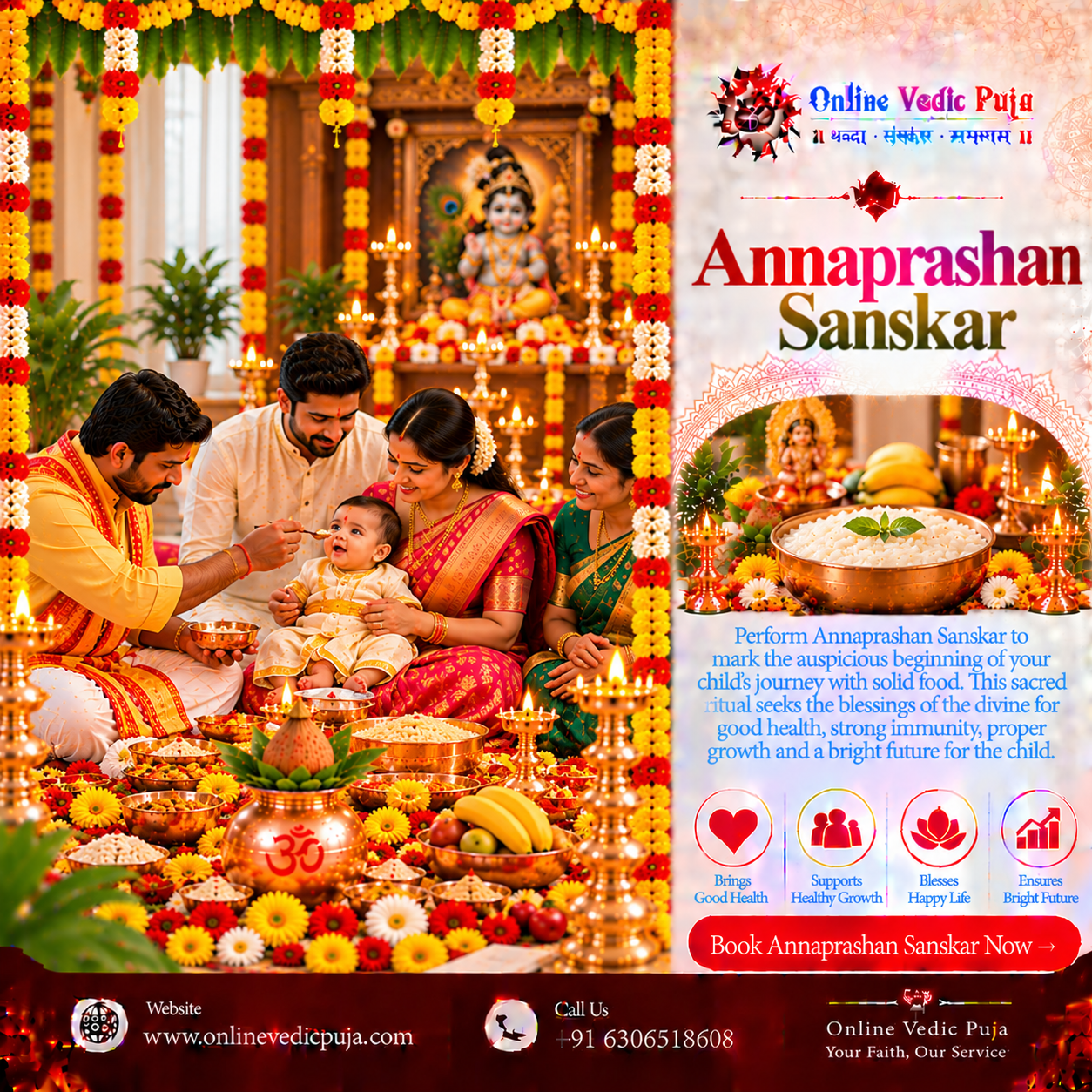

🙏 What Is Annaprashan Sanskar?
Annaprashan Sanskar, also known as the first-feeding ceremony, is one of the traditional Hindu sixteen Sanskars. The word Annaprashan refers to the ceremonial introduction of food, traditionally associated with a baby’s first taste of solid food beyond milk.
In Hindu families, this ceremony is considered an important milestone in a child’s early life. Parents and relatives gather to pray for the child’s well-being, express gratitude, and seek blessings for a happy and healthy future.
The ceremony may include Ganesh Puja, Sankalp, worship of deities, Vedic mantra recitation, and the symbolic feeding of a small amount of suitable food to the baby. The exact procedure varies according to regional customs and family traditions.
1. Religious and Cultural Significance of Annaprashan Sanskar
Annaprashan Sanskar celebrates the transition toward a new stage of feeding and growth. In Hindu tradition, food is often regarded with gratitude and respect because it sustains life and is associated with nourishment and abundance.
Families traditionally perform this ceremony to:
-
🙏 Seek blessings for the child’s well-being and growth.
-
🌾 Express gratitude for food and nourishment.
-
🕉️ Preserve family traditions and religious values.
-
❤️ Celebrate an important milestone with loved ones.
-
🌸 Pray for happiness, strength, and a supportive family environment.
The ceremony is both a religious observance and a joyful family gathering. Its spiritual significance complements the practical responsibility of introducing age-appropriate foods safely.
🗓️ 2. When Is Annaprashan Sanskar Performed?
The timing of Annaprashan Sanskar varies among Hindu communities and families. Traditionally, it is often performed when a baby is around six months old, although some families follow different customs based on the child’s circumstances and their regional traditions.
From a health perspective, complementary foods are generally introduced at around six months when the baby shows appropriate developmental readiness. Parents should consult their paediatrician if the baby was born prematurely, has feeding difficulties, or has any medical concerns.
Families may also consult a Panchang or priest when selecting an auspicious date and time. The baby’s health, readiness for complementary feeding, and comfort should take priority over a particular Muhurat.
🕉️ 3. Ganesh Puja and Mangalacharan
The ceremony may begin with Ganesh Puja, as Lord Ganesha is traditionally worshipped before many auspicious Hindu rituals.
The priest may offer flowers, Akshat, Durva, incense, and a lit diya while reciting appropriate mantras. Family members join in prayer for the peaceful completion of the ceremony and the child’s well-being.
Depending on the family’s tradition, other deities may also be worshipped. These opening rituals establish a devotional atmosphere before the main Annaprashan ceremony.
🌿 4. Sankalp for the Child’s Well-Being
Sankalp is the formal expression of the intention behind a religious ceremony. During Annaprashan Sanskar, the parents or family representatives may take Sankalp with the priest’s guidance.
The prayers may express wishes for:
-
The child’s healthy growth and development.
-
Happiness, peace, and harmony within the family.
-
The child’s future filled with love and care.
-
Wisdom and patience for the parents.
-
Gratitude for the nourishment and support the family receives.
This step allows parents to express their hopes for the child while acknowledging the responsibilities of nurturing and caring for the baby.
5. Kalash Sthapana and Puja Preparation
Depending on the selected Puja Vidhi, Kalash Sthapana may be included in the ceremony. A Kalash containing clean water is placed at the worship area, and customary prayers may be recited.
The priest may arrange flowers, Akshat, Roli, incense, a diya, and other traditional Puja materials. The worship area is prepared according to the family’s customs.
Since a baby is involved, the arrangements should be clean, calm, and comfortable. The child should not be exposed to smoke, excessive fragrance, loud sounds, or prolonged ritual activities that interfere with feeding or sleep.
🍚 6. The First-Feeding Ritual
The main part of Annaprashan Sanskar is the symbolic introduction of food to the baby. In many Hindu traditions, a small amount of cooked rice is offered during the ceremony.
Depending on the family’s customs and the baby’s feeding readiness, the ritual may include:
-
Preparing a small quantity of suitable, age-appropriate food.
-
Offering prayers before the first ceremonial taste.
-
Having a parent or elder offer a tiny spoonful to the baby.
-
Giving blessings for nourishment and healthy development.
-
Sharing the family’s happiness through prayers and celebration.
Important feeding guidance: The food must be suitable for the baby’s age and developmental readiness. It should be soft, smooth or appropriately mashed, and served in a safe texture to reduce choking risk. Avoid whole nuts, hard food pieces, and other choking hazards. Do not give honey to a baby under 12 months. Never force the baby to eat; the ceremony can remain symbolic if the baby is not interested.
🌾 7. Annapurna Devi and Gratitude for Food
Some families include prayers to Goddess Annapurna, who is revered in Hindu tradition as a deity associated with food and nourishment. Other families offer prayers to their chosen household deity or follow their customary form of worship.
These prayers express gratitude for the food that sustains life and the care that supports a child’s growth.
The family may offer flowers, fruits, cooked food, or other customary items according to the chosen Puja Vidhi. The priest can advise on the appropriate offerings and prayers for the family’s tradition.
📿 8. Vedic Mantra Recitation and Blessings
Vedic mantras and traditional prayers may be recited during Annaprashan Sanskar. The priest selects the appropriate verses according to the family’s customs and the ritual procedure.
Parents and family members may listen to the mantras, offer flowers, and pray for the baby’s well-being. Elders may bless the child with wishes for happiness, wisdom, strength, and a loving upbringing.
The ceremony does not need to be lengthy or elaborate. A simple observance with sincere prayers and a safe first-feeding ritual can be equally meaningful.
🪔 9. Annaprashan Sanskar Puja Samagri
The required materials depend on the selected Puja Vidhi. Common items may include:
-
🪷 Fresh flowers and garlands.
-
🪔 Diya, cotton wicks, and suitable oil or ghee.
-
🌾 Akshat, Roli, and Kumkum.
-
💧 Clean water and a Kalash.
-
🥥 Coconut and seasonal fruits.
-
🍚 A small quantity of freshly prepared, age-appropriate food.
-
🍬 Sweets or Prasad for adults and older children.
-
📿 A prayer book or traditional ritual materials.
-
🥄 A clean spoon and a suitable feeding bowl for the baby.
The priest can provide a final list according to the family’s customs. The baby’s food should be prepared hygienically, without unsafe ingredients, and separately from offerings that are not appropriate for infant consumption.
👨👩👧 10. Family Participation and Traditional Celebration
Annaprashan Sanskar is often celebrated with parents, grandparents, relatives, and close friends. The ceremony may be performed at home or at a suitable religious venue.
Family members may offer blessings, participate in prayers, and share the joy of the baby’s milestone. Some families arrange traditional clothing, decorations, photographs, or a family meal after the ceremony.
The event should be planned around the baby’s normal feeding and sleeping routine. A calm environment, limited handling, and clean hands help keep the occasion comfortable for the baby and parents.
🩺 11. Safe Introduction of Complementary Foods
The religious ceremony should be accompanied by safe and developmentally appropriate feeding practices. Around six months, many babies begin complementary feeding while continuing breast milk or infant formula.
Parents should consider the following guidance:
-
Introduce foods that are soft and appropriate for the baby’s developmental stage.
-
Feed the baby while seated upright and supervised by an attentive adult.
-
Avoid foods that present choking hazards.
-
Do not add salt or sugar unnecessarily to the baby’s food.
-
Introduce common allergenic foods in age-appropriate forms and seek medical guidance if the baby has a history of allergies or other risk factors.
-
Continue breast milk or infant formula as recommended for the baby’s age.
If the baby is not ready to eat during the ceremony, parents can perform the ritual prayers without feeding and introduce food later when the baby is comfortable.
🎉 12. Naming, Gifts, and Family Memories
Some families combine Annaprashan Sanskar with a small family celebration, traditional clothing, photographs, or gifts for the baby. These are optional elements and vary by custom.
Parents may keep a photograph, invitation, or written record of the ceremony as a family memory. Relatives may offer practical gifts that support the child’s care and development.
The purpose of the celebration is to mark an important milestone with affection and gratitude. Expensive arrangements are not necessary; the baby’s comfort and safe feeding should remain the priority.
🌺 Arrange Annaprashan Sanskar with Vedic Puja
Vedic Puja can help families arrange Annaprashan Sanskar according to their religious traditions and preferences. Assistance may include priest coordination, guidance on Puja Samagri, Vedic mantra recitation, prayers to the family’s chosen deities, and planning the traditional first-feeding ceremony.
Whether you prefer a simple home Puja or a family gathering, the ceremony can be planned with devotion, care, and attention to the baby’s health, comfort, and feeding readiness.
Vedic Puja — श्रद्धा • संस्कार • समाधान
अन्नप्राशन संस्कार विवरण
🙏 अन्नप्राशन संस्कार क्या है?
अन्नप्राशन संस्कार हिंदू धर्म के सोलह पारंपरिक संस्कारों में से एक माना जाता है। यह नवजात शिशु के जीवन का एक महत्वपूर्ण संस्कार है, जिसमें बच्चे को पहली बार दूध के अतिरिक्त ठोस या पूरक आहार का प्रतीकात्मक रूप से परिचय कराया जाता है। कई हिंदू परिवारों में इस अवसर पर बच्चे को थोड़ी मात्रा में पका हुआ चावल या उसके लिए उपयुक्त भोजन चखाया जाता है।
इस संस्कार के माध्यम से परिवार बच्चे के अच्छे स्वास्थ्य, विकास और सुखी जीवन के लिए ईश्वर से प्रार्थना करता है। पूजा में गणेश पूजन, संकल्प, वैदिक मंत्रोच्चार, देवी-देवताओं की आराधना और परिवार के बड़ों का आशीर्वाद शामिल हो सकता है।
अन्नप्राशन संस्कार धार्मिक परंपरा के साथ-साथ परिवार के लिए खुशी का अवसर भी है। इसे बच्चे की उम्र, भोजन के लिए उसकी तैयारी और परिवार की परंपराओं को ध्यान में रखकर आयोजित करना चाहिए।
1. अन्नप्राशन संस्कार का धार्मिक एवं सांस्कृतिक महत्व
हिंदू परंपरा में अन्न को जीवन और पोषण का महत्वपूर्ण आधार माना जाता है। अन्नप्राशन संस्कार के माध्यम से परिवार भोजन के प्रति कृतज्ञता व्यक्त करता है और बच्चे के विकास के लिए मंगलकामना करता है।
इस संस्कार में परिवार पारंपरिक रूप से निम्नलिखित भाव व्यक्त करता है:
-
🙏 बच्चे के स्वास्थ्य और अच्छे विकास के लिए प्रार्थना।
-
🌾 अन्न, पोषण और जीवन के प्रति कृतज्ञता।
-
🕉️ धार्मिक परंपराओं और पारिवारिक संस्कारों का सम्मान।
-
❤️ परिवार के साथ बच्चे के महत्वपूर्ण पड़ाव का उत्सव मनाना।
-
🌸 बच्चे के जीवन में प्रेम, सुरक्षा और सुख की कामना।
अन्नप्राशन संस्कार धार्मिक अनुष्ठान होने के साथ-साथ माता-पिता को बच्चे के भोजन और देखभाल की नई जिम्मेदारियों के प्रति जागरूक होने का अवसर भी देता है।
🗓️ 2. अन्नप्राशन संस्कार कब किया जाता है?
हिंदू परंपरा में अन्नप्राशन संस्कार का समय अलग-अलग परिवारों और क्षेत्रों में भिन्न हो सकता है। कई परिवार इसे बच्चे की आयु लगभग छह महीने होने पर आयोजित करते हैं, जबकि कुछ समुदाय अपनी परंपरा के अनुसार अलग समय चुनते हैं।
स्वास्थ्य संबंधी मार्गदर्शन के अनुसार, अधिकांश शिशुओं में लगभग छह महीने की आयु के आसपास पूरक आहार शुरू किया जाता है, जब वे विकास की दृष्टि से इसके लिए तैयार हों। यदि बच्चा समय से पहले जन्मा हो, उसे भोजन करने में कठिनाई हो या कोई चिकित्सकीय समस्या हो, तो बाल रोग विशेषज्ञ से सलाह लेना उचित है।
परिवार शुभ तिथि और मुहूर्त के लिए पंचांग या पुरोहित से भी परामर्श कर सकता है। हालांकि, बच्चे की भोजन के लिए तैयारी, स्वास्थ्य और आराम को किसी विशेष मुहूर्त से अधिक प्राथमिकता देनी चाहिए।
🕉️ 3. गणेश पूजन एवं मंगलाचरण
अन्नप्राशन संस्कार की शुरुआत कई परिवारों में भगवान गणेश के पूजन से की जाती है। हिंदू परंपरा में शुभ कार्यों के आरंभ में गणेश जी का स्मरण करना मंगलकारी माना जाता है।
पुरोहित पुष्प, अक्षत, दूर्वा, धूप और दीप आदि सामग्री से गणेश पूजन कर सकते हैं। इस दौरान पारंपरिक मंत्रों का उच्चारण किया जाता है और परिवार बच्चे के कल्याण तथा समारोह के शांतिपूर्ण आयोजन की प्रार्थना करता है।
परिवार की परंपरा के अनुसार अन्य देवी-देवताओं की पूजा भी शामिल की जा सकती है। इसके बाद अन्नप्राशन की मुख्य विधि संपन्न की जाती है।
🌿 4. बच्चे के कल्याण के लिए संकल्प
संकल्प पूजा का एक महत्वपूर्ण चरण है, जिसमें परिवार धार्मिक अनुष्ठान का उद्देश्य व्यक्त करता है। अन्नप्राशन संस्कार के दौरान माता-पिता या परिवार के सदस्य पुरोहित के मार्गदर्शन में बच्चे के कल्याण के लिए संकल्प कर सकते हैं।
संकल्प में निम्नलिखित भाव शामिल हो सकते हैं:
-
बच्चे के स्वस्थ विकास और सुखी जीवन की कामना।
-
परिवार में प्रेम, शांति और सद्भाव बनाए रखने की प्रार्थना।
-
बच्चे को सुरक्षित और प्रेमपूर्ण वातावरण देने का संकल्प।
-
माता-पिता को धैर्य और जिम्मेदारी निभाने की प्रेरणा।
-
अन्न और पोषण के प्रति कृतज्ञता व्यक्त करना।
यह संकल्प माता-पिता की आशाओं और जिम्मेदारियों को धार्मिक भावना के साथ व्यक्त करने का अवसर देता है।
5. कलश स्थापना एवं पूजा की तैयारी
अन्नप्राशन संस्कार की विधि के अनुसार कलश स्थापना भी की जा सकती है। स्वच्छ जल से भरे कलश को पूजा स्थल पर स्थापित किया जाता है और पारंपरिक मंत्रों का उच्चारण किया जा सकता है।
पूजा स्थल पर फूल, अक्षत, रोली, धूप, दीप और अन्य आवश्यक सामग्री व्यवस्थित की जाती है। पुरोहित परिवार की परंपरा के अनुसार प्रारंभिक पूजा संपन्न करवाते हैं।
चूँकि इस संस्कार में नवजात शिशु शामिल होता है, इसलिए पूजा स्थल स्वच्छ, शांत और आरामदायक होना चाहिए। बच्चे को धुएँ, तेज सुगंध, अधिक शोर और लंबे समय तक असुविधाजनक स्थिति में रखने से बचें।
🍚 6. अन्नप्राशन की मुख्य विधि
अन्नप्राशन संस्कार का मुख्य भाग बच्चे को पहली बार ठोस या पूरक आहार का प्रतीकात्मक परिचय कराना है। कई हिंदू परंपराओं में इसके लिए थोड़ी मात्रा में पका हुआ चावल उपयोग किया जाता है।
परिवार की परंपरा और बच्चे की भोजन संबंधी तैयारी के अनुसार इस संस्कार में निम्नलिखित चरण शामिल हो सकते हैं:
-
बच्चे के लिए उपयुक्त भोजन थोड़ी मात्रा में तैयार करना।
-
भोजन अर्पित करने से पहले प्रार्थना करना।
-
माता-पिता या परिवार के किसी सदस्य द्वारा बच्चे को प्रतीकात्मक रूप से थोड़ा भोजन चखाना।
-
बच्चे के अच्छे स्वास्थ्य और विकास के लिए मंगलकामना करना।
-
परिवार के सदस्यों के साथ इस महत्वपूर्ण पड़ाव का उत्सव मनाना।
बच्चे को भोजन कराने में सावधानी: भोजन बच्चे की उम्र और विकास के अनुसार नरम, अच्छी तरह पका और उपयुक्त बनावट वाला होना चाहिए। कठोर टुकड़े, साबुत मेवे और दम घुटने का खतरा पैदा करने वाले खाद्य पदार्थ न दें। 12 महीने से कम उम्र के बच्चे को शहद न दें। बच्चे को जबरदस्ती भोजन न कराएँ। यदि बच्चा उस समय भोजन लेने में रुचि नहीं दिखाता, तो केवल प्रतीकात्मक पूजा करके वास्तविक भोजन बाद में कराया जा सकता है।
🌾 7. माता अन्नपूर्णा की पूजा एवं अन्न के प्रति कृतज्ञता
कुछ परिवार अन्नप्राशन संस्कार में माता अन्नपूर्णा की पूजा भी करते हैं। हिंदू परंपरा में माता अन्नपूर्णा को अन्न और पोषण से संबंधित देवी के रूप में श्रद्धापूर्वक पूजा जाता है। अन्य परिवार अपने इष्टदेव या कुलदेवता की आराधना करते हैं।
इस पूजा का भाव भोजन के महत्व को स्वीकार करना और जीवन के पोषण के लिए कृतज्ञता व्यक्त करना है।
परिवार की परंपरा के अनुसार पुष्प, फल, पका हुआ भोजन या अन्य पारंपरिक सामग्री अर्पित की जा सकती है। पूजा में कौन-सी सामग्री और मंत्र शामिल होंगे, इसकी जानकारी पुरोहित से प्राप्त की जा सकती है।
📿 8. वैदिक मंत्रोच्चार एवं आशीर्वाद
अन्नप्राशन संस्कार के दौरान पुरोहित वैदिक मंत्रों और पारंपरिक प्रार्थनाओं का उच्चारण कर सकते हैं। मंत्रों का चयन परिवार की धार्मिक परंपरा और पूजा विधि के अनुसार किया जाता है।
माता-पिता और परिवार के अन्य सदस्य मंत्रों का श्रवण कर सकते हैं, पुष्प अर्पित कर सकते हैं और बच्चे के अच्छे स्वास्थ्य, ज्ञान, प्रसन्नता तथा विकास के लिए प्रार्थना कर सकते हैं।
परिवार के बड़े बच्चे को आशीर्वाद देते हुए उसके सुखी जीवन की कामना कर सकते हैं। संस्कार का आयोजन बहुत लंबा या भव्य होना आवश्यक नहीं है। श्रद्धापूर्वक की गई सरल पूजा भी सार्थक हो सकती है।
🪔 9. अन्नप्राशन संस्कार की पूजा सामग्री
पूजा सामग्री परिवार की परंपरा और चुनी गई विधि के अनुसार अलग-अलग हो सकती है। सामान्य रूप से निम्नलिखित वस्तुओं की आवश्यकता हो सकती है:
-
🪷 ताजे फूल और फूलों की माला।
-
🪔 दीपक, रुई की बत्ती और उपयुक्त तेल या घी।
-
🌾 अक्षत, रोली और कुमकुम।
-
💧 स्वच्छ जल और कलश।
-
🥥 नारियल एवं मौसमी फल।
-
🍚 बच्चे के लिए थोड़ी मात्रा में ताजा और उपयुक्त भोजन।
-
🍬 बड़ों और बड़े बच्चों के लिए मिठाई या प्रसाद।
-
📿 पूजा पुस्तक या पारंपरिक सामग्री।
-
🥄 बच्चे के लिए साफ चम्मच और उपयुक्त कटोरी।
पुरोहित से आवश्यक सामग्री की सूची पहले ही प्राप्त कर लेना उचित रहता है। बच्चे के भोजन को स्वच्छ तरीके से तैयार करें और पूजा में अर्पित ऐसी वस्तुएँ बच्चे को न खिलाएँ जो उसकी उम्र के लिए सुरक्षित न हों।
👨👩👧 10. परिवार की भागीदारी एवं पारंपरिक उत्सव
अन्नप्राशन संस्कार में माता-पिता, दादा-दादी, नाना-नानी, रिश्तेदार और करीबी मित्र शामिल हो सकते हैं। परिवार अपनी सुविधा के अनुसार इसे घर पर या किसी उपयुक्त धार्मिक स्थान पर आयोजित कर सकता है।
समारोह में परिवार के बड़ों का आशीर्वाद, मंत्रोच्चार, बच्चे को भोजन चखाने की रस्म और प्रसाद वितरण शामिल हो सकता है। कुछ परिवार पारंपरिक कपड़े, सजावट, तस्वीरें या पारिवारिक भोजन की व्यवस्था भी करते हैं।
आयोजन के समय बच्चे के सोने और दूध पीने के समय का ध्यान रखना चाहिए। शांत वातावरण, सीमित लोगों द्वारा बच्चे को गोद में लेना और साफ हाथ रखना बच्चे तथा माता-पिता दोनों के लिए सुविधा प्रदान करता है।
🩺 11. पूरक आहार शुरू करते समय सुरक्षा
अन्नप्राशन संस्कार के साथ बच्चे को भोजन कराने की सुरक्षित और उम्र के अनुसार उपयुक्त विधि अपनाना आवश्यक है। लगभग छह महीने की आयु में अधिकांश शिशुओं के लिए स्तनपान या शिशु फॉर्मूला के साथ पूरक आहार शुरू किया जाता है।
माता-पिता को निम्नलिखित बातों का ध्यान रखना चाहिए:
-
बच्चे के विकास के अनुसार नरम और उपयुक्त बनावट वाला भोजन दें।
-
बच्चे को सीधा बैठाकर और वयस्क की निगरानी में भोजन कराएँ।
-
दम घुटने का खतरा पैदा करने वाले खाद्य पदार्थों से बचें।
-
बच्चे के भोजन में अनावश्यक नमक या चीनी न मिलाएँ।
-
संभावित एलर्जी वाले खाद्य पदार्थ उम्र के अनुसार उचित रूप में दें और विशेष जोखिम होने पर डॉक्टर से सलाह लें।
-
बच्चे की उम्र के अनुसार स्तनपान या शिशु फॉर्मूला जारी रखें।
यदि बच्चा संस्कार के समय भोजन करने के लिए तैयार न हो, तो माता-पिता केवल पूजा और प्रार्थना कर सकते हैं। वास्तविक भोजन तब दें जब बच्चा सहज और तैयार हो।
🎉 12. पारिवारिक उत्सव, उपहार एवं यादें
कुछ परिवार अन्नप्राशन संस्कार के साथ छोटा पारिवारिक उत्सव आयोजित करते हैं। बच्चे के लिए पारंपरिक कपड़े, स्मृति-चिह्न, तस्वीरें या उपहार रखे जा सकते हैं। ये व्यवस्थाएँ परिवार की इच्छा और परंपरा के अनुसार वैकल्पिक होती हैं।
परिवार के सदस्य बच्चे के नाम या संस्कार की तारीख के साथ कोई यादगार वस्तु भी रख सकते हैं। रिश्तेदार ऐसे उपहार दे सकते हैं जो बच्चे की देखभाल और विकास में उपयोगी हों।
इस समारोह का मुख्य उद्देश्य बच्चे के जीवन के महत्वपूर्ण पड़ाव को प्रेम, कृतज्ञता और खुशी के साथ मनाना है। बच्चे की सुविधा और सुरक्षित भोजन को हमेशा प्राथमिकता देनी चाहिए।
🌺 Vedic Puja के साथ अन्नप्राशन संस्कार का आयोजन करें
Vedic Puja आपके परिवार की धार्मिक परंपराओं और आवश्यकताओं के अनुसार अन्नप्राशन संस्कार आयोजित करने में सहायता कर सकता है। पुरोहित समन्वय, पूजा सामग्री की जानकारी, वैदिक मंत्रोच्चार, इष्टदेव की पूजा और बच्चे को पहली बार भोजन कराने की पारंपरिक रस्म की व्यवस्था के लिए मार्गदर्शन प्राप्त किया जा सकता है।
चाहे आप घर पर सरल पूजा करना चाहते हों या परिवार के साथ पारंपरिक समारोह आयोजित करना चाहते हों, आयोजन को श्रद्धा, प्रेम और बच्चे तथा माता की सुविधा को ध्यान में रखकर व्यवस्थित किया जा सकता है।
Vedic Puja — श्रद्धा • संस्कार • समाधान


Reviews
There are no reviews yet.