
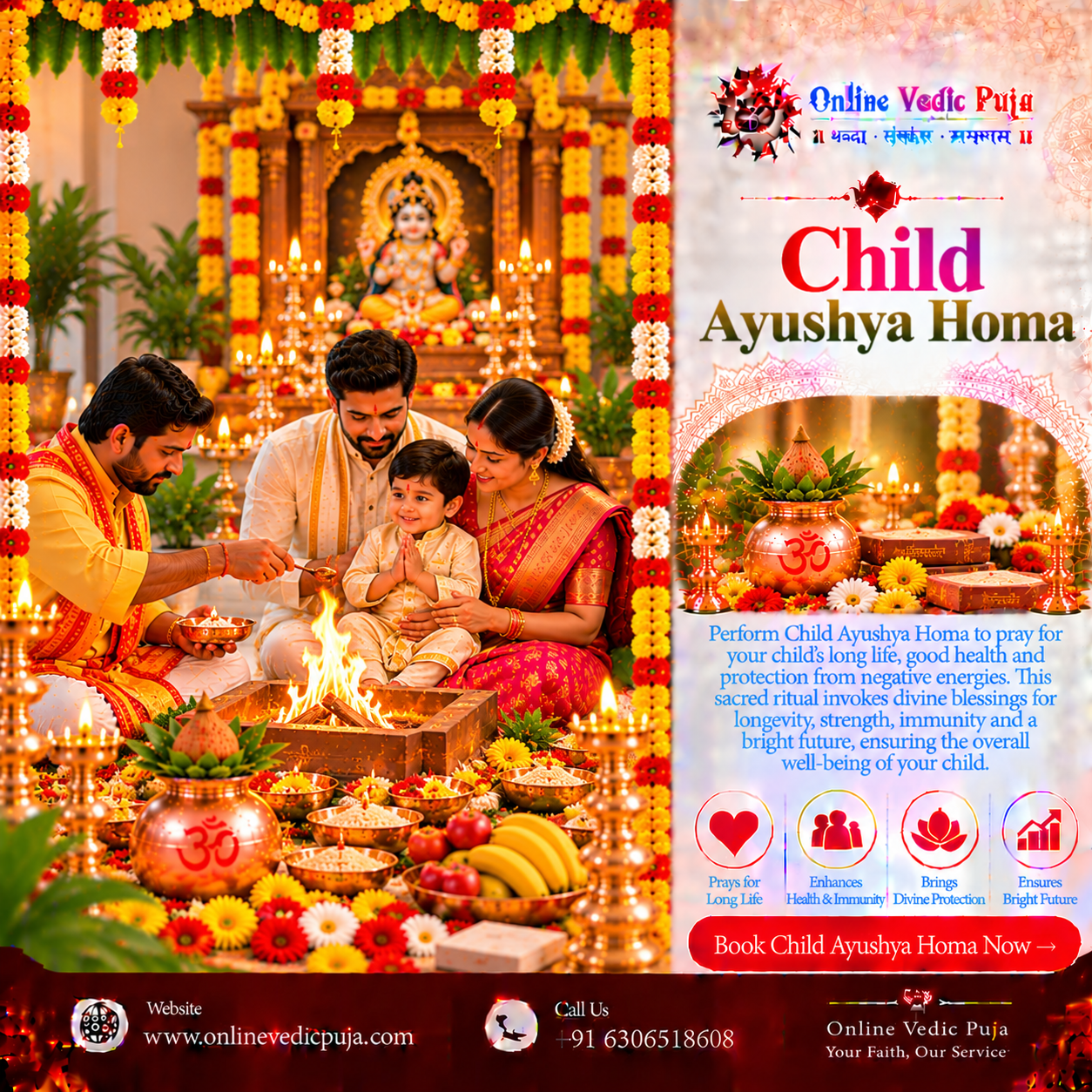
🙏 What Is Child Ayushya Homa?
Child Ayushya Homa is a traditional Hindu Vedic fire ritual performed by families to pray for a child’s longevity, well-being, strength, and happiness. The word Ayushya relates to life and longevity, while Homa refers to a sacred fire ceremony in which offerings are made while traditional mantras are recited.
Parents may arrange this ritual after a child’s birth, on a birthday, during an important family occasion, or according to the guidance of their family priest. The ceremony provides an opportunity to express gratitude, seek divine blessings, and pray for the child’s healthy development.
Ayushya Homa is a spiritual and cultural practice. It does not guarantee a particular lifespan or health outcome and should complement, never replace, appropriate pediatric healthcare.
🪔 1. Ganesh Puja for an Auspicious Beginning
The ceremony commonly begins with the worship of Lord Ganesha, who is traditionally revered before important religious rituals.
The priest offers flowers, akshat, roli, and other customary items while reciting appropriate prayers. Parents seek blessings for a peaceful ceremony and express their hopes for the child’s happiness, confidence, and well-being.
🌼 2. Sankalp for the Child’s Well-Being
The priest performs a Sankalp according to the family’s tradition, expressing the intention behind the Homa. The child’s name and other customary details may be included.
Parents and family members pray for the child’s strength, positive development, emotional well-being, and a joyful life. The Sankalp represents the family’s devotion and heartfelt wishes for the child’s future.
🕉️ 3. Kalash Sthapana and Devata Pujan
Depending on the chosen ritual, the priest may perform Kalash Sthapana and worship the relevant deities. A Kalash containing clean water is arranged with customary offerings, flowers, and other puja materials.
These preparations establish a devotional setting for the Homa. The precise sequence of worship varies according to the priest’s tradition, regional practices, and the family’s preferences.
📿 4. Ayushya Mantra Jaap
An important part of Ayushya Homa is the recitation of traditional mantras associated with longevity, vitality, and well-being. The priest follows the relevant ritual tradition and guides the family through the prayers.
Parents may participate by listening to the mantras, offering flowers, or joining in the prayers where appropriate. The spiritual intention is to seek divine blessings for the child’s life and express gratitude for the joy of parenthood.
🔥 5. Sacred Homa and Offerings
The central part of the ceremony is the sacred fire ritual. The priest prepares the Homa kund and makes traditional offerings while reciting the prescribed mantras.
Depending on the ritual tradition, offerings may include ghee and other suitable Homa materials. The ceremony is conducted according to the priest’s guidance and the selected Vedic procedure.
Child safety is essential: keep the child at a safe distance from the fire, ensure good ventilation, and maintain constant adult supervision. Infants and young children should be protected from smoke and excessive heat.
🌞 6. Prayers for Health, Strength, and Happiness
During the Homa, the family prays for the child’s physical well-being, emotional happiness, learning, and positive growth. These prayers reflect the parents’ hopes that the child will grow in a caring, secure, and supportive environment.
Families may also pray for patience and strength for parents and caregivers as they fulfil their responsibilities toward the child.
Religious prayers can provide comfort and a sense of connection to family traditions, while the child’s health needs should continue to be addressed through appropriate medical care.
🌺 7. Blessings from Parents and Elders
After the main ritual, parents and family elders may offer blessings to the child. Grandparents and relatives can participate in prayers and express their good wishes for the child’s future.
The family may offer flowers, distribute prasad, and conclude the ceremony with Aarti according to its customs. This creates a meaningful occasion centred on love, gratitude, and family togetherness.
🗓️ 8. When Is Child Ayushya Homa Performed?
Families may choose to perform Ayushya Homa on occasions such as:
-
After the child’s birth, when appropriate according to family customs
-
On the child’s birthday or traditional birth Tithi
-
During a significant family or religious occasion
-
At a time recommended by the family priest
-
As part of a customary prayer ceremony for the child’s well-being
The date and time depend on the family’s tradition and practical needs. If the child is unwell or the ceremony would disrupt essential care, it is sensible to postpone it.
9. Puja Samagri for Child Ayushya Homa
The exact materials depend on the ritual tradition followed by the priest. Common items may include:
-
Roli, kumkum, haldi, and akshat
-
Flowers and garlands
-
Kalash and clean water
-
Diya, cotton wicks, and ghee
-
Homa kund and appropriate Homa samagri
-
Ghee and other traditional fire offerings
-
Fruits, sweets, and prasad
-
A clean cloth and comfortable essentials for the child
The priest should confirm the final list before the ceremony so the family can prepare everything properly.
👨👩👧 10. Family Participation and Devotion
Child Ayushya Homa is often a family-centred ceremony. Parents may sit near the priest, participate in the Sankalp, and join the prayers. Other family members can observe respectfully or take part according to the ritual’s requirements.
The ceremony can be kept simple and peaceful, especially when an infant or young child is involved. The child’s feeding schedule, sleep, comfort, and usual routine should be prioritised throughout the event.
❤️ 11. Important Considerations for the Child
The Homa is a religious ritual, not a medical treatment. Families should continue regular pediatric check-ups, recommended vaccinations, appropriate nutrition, and other healthcare measures.
For a newborn or infant, avoid smoke exposure and excessive heat. Choose a well-ventilated venue, keep the child away from the Homa kund, and do not place ritual substances on the child’s skin or give any ritual ingredients to the child unless they are confirmed safe for their age by an appropriate healthcare professional.
If the child has a health concern, consult a qualified pediatrician rather than relying on a religious ceremony for diagnosis or treatment.
🌟 12. Why Choose Vedic Puja for Child Ayushya Homa?
Vedic Puja helps families prepare for Child Ayushya Homa with attention to traditional procedures, devotional practices, and the child’s comfort. Depending on the selected arrangement, assistance may include:
-
Guidance for Ganesh Puja and Sankalp
-
Traditional Ayushya mantra recitation
-
Homa arrangements and ritual guidance
-
A puja samagri checklist
-
Guidance on selecting a suitable date and time
-
Aarti and prasad arrangements according to family customs
-
Assistance with organising the ceremony at home or another suitable venue
The ritual can be adapted to the family’s regional customs and preferences while keeping the child’s safety and well-being at the centre of the arrangements.
Vedic Puja — श्रद्धा • संस्कार • समाधान
बाल आयुष्य होम विवरण
🙏 बाल आयुष्य होम क्या है?
बाल आयुष्य होम एक पारंपरिक हिंदू वैदिक अग्नि अनुष्ठान है, जिसे बच्चे के अच्छे स्वास्थ्य, सुख, दीर्घायु और मंगलमय जीवन की कामना के लिए किया जाता है। आयुष्य का संबंध जीवन और दीर्घायु से है, जबकि होम एक ऐसा धार्मिक अनुष्ठान है जिसमें पवित्र अग्नि में पारंपरिक सामग्री अर्पित करते हुए मंत्रों का उच्चारण किया जाता है।
परिवार अपनी परंपरा के अनुसार बच्चे के जन्म के बाद, जन्मदिन पर या किसी अन्य महत्वपूर्ण अवसर पर यह होम करवा सकता है। इस अनुष्ठान के माध्यम से माता-पिता ईश्वर के प्रति आभार व्यक्त करते हैं और बच्चे के उज्ज्वल भविष्य के लिए प्रार्थना करते हैं।
यह एक आध्यात्मिक एवं सांस्कृतिक परंपरा है। इससे बच्चे की आयु या स्वास्थ्य परिणामों की कोई गारंटी नहीं मिलती। इसे उचित चिकित्सा और बाल रोग विशेषज्ञ की देखभाल का विकल्प नहीं मानना चाहिए।
🪔 1. शुभारंभ के लिए गणेश पूजन
बाल आयुष्य होम की शुरुआत सामान्यतः भगवान गणेश की पूजा से की जाती है। हिंदू परंपरा में भगवान गणेश को शुभ कार्यों के आरंभ में पूजनीय माना जाता है।
पुरोहित रोली, अक्षत, पुष्प और अन्य पारंपरिक सामग्री अर्पित करते हुए मंत्रों का उच्चारण करते हैं। माता-पिता बच्चे के सुख, शांति, प्रसन्नता और मंगलमय जीवन के लिए प्रार्थना करते हैं।
🌼 2. बच्चे के कल्याण के लिए संकल्प
पूजा के दौरान पुरोहित परिवार की परंपरा के अनुसार संकल्प करवाते हैं। इसमें अनुष्ठान का उद्देश्य व्यक्त किया जाता है तथा बच्चे का नाम और अन्य आवश्यक विवरण शामिल किए जा सकते हैं।
माता-पिता और परिवार के सदस्य बच्चे के अच्छे स्वास्थ्य, सकारात्मक विकास, मानसिक प्रसन्नता और सुखी जीवन के लिए प्रार्थना करते हैं। संकल्प परिवार की श्रद्धा और बच्चे के प्रति प्रेमपूर्ण शुभकामनाओं का प्रतीक होता है।
🕉️ 3. कलश स्थापना एवं देव पूजन
पूजा की निर्धारित विधि के अनुसार कलश स्थापना और संबंधित देवी-देवताओं का पूजन किया जा सकता है। कलश में स्वच्छ जल रखकर उसके साथ पुष्प और अन्य पारंपरिक पूजा सामग्री व्यवस्थित की जाती है।
इन तैयारियों का उद्देश्य होम के लिए श्रद्धापूर्ण वातावरण बनाना होता है। पूजा का क्रम पुरोहित की परंपरा, क्षेत्रीय रीति-रिवाज और परिवार की पसंद के अनुसार अलग हो सकता है।
📿 4. आयुष्य मंत्र जाप
बाल आयुष्य होम में आयु, जीवन और मंगलकामना से जुड़े पारंपरिक मंत्रों का उच्चारण महत्वपूर्ण माना जाता है। पुरोहित संबंधित विधि के अनुसार मंत्रों का पाठ करते हैं और परिवार को प्रार्थना में शामिल होने का अवसर देते हैं।
माता-पिता मंत्र सुन सकते हैं, पुष्प अर्पित कर सकते हैं और अपनी श्रद्धा के अनुसार प्रार्थना कर सकते हैं। इस अनुष्ठान का आध्यात्मिक उद्देश्य बच्चे के कल्याण के लिए ईश्वर का आशीर्वाद माँगना और उसके जीवन के प्रति कृतज्ञता व्यक्त करना है।
🔥 5. पवित्र अग्नि में आहुति
बाल आयुष्य होम का मुख्य भाग पवित्र अग्नि में आहुति देना होता है। पुरोहित हवन कुंड तैयार करते हैं और निर्धारित मंत्रों के साथ पारंपरिक सामग्री अर्पित करते हैं।
विधि के अनुसार घी और अन्य उपयुक्त हवन सामग्री का उपयोग किया जा सकता है। संपूर्ण अनुष्ठान पुरोहित के मार्गदर्शन और चुनी गई वैदिक परंपरा के अनुसार संपन्न किया जाता है।
बच्चे की सुरक्षा का विशेष ध्यान रखें। बच्चे को अग्नि से सुरक्षित दूरी पर रखें, कमरे में पर्याप्त वेंटिलेशन सुनिश्चित करें और पूरे समय किसी जिम्मेदार वयस्क की निगरानी रखें। शिशुओं और छोटे बच्चों को धुएँ तथा अधिक गर्मी से बचाना आवश्यक है।
🌞 6. स्वास्थ्य, शक्ति एवं प्रसन्नता के लिए प्रार्थना
होम के दौरान परिवार बच्चे के स्वास्थ्य, भावनात्मक सुख, शिक्षा और सकारात्मक विकास के लिए प्रार्थना करता है। इन प्रार्थनाओं में माता-पिता की यह कामना व्यक्त होती है कि बच्चा प्रेमपूर्ण, सुरक्षित और सहयोगपूर्ण वातावरण में बड़ा हो।
परिवार बच्चे की देखभाल करने वाले माता-पिता और अन्य सदस्यों के धैर्य, शक्ति और जिम्मेदारियों को अच्छी तरह निभाने की क्षमता के लिए भी प्रार्थना कर सकता है।
धार्मिक अनुष्ठान परिवार को मानसिक संतोष और सांस्कृतिक जुड़ाव दे सकता है, लेकिन बच्चे के स्वास्थ्य संबंधी आवश्यकताओं के लिए उचित चिकित्सा देखभाल जारी रखना जरूरी है।
🌺 7. माता-पिता एवं बड़ों का आशीर्वाद
मुख्य अनुष्ठान के बाद माता-पिता और परिवार के बड़े बच्चे को आशीर्वाद दे सकते हैं। दादा-दादी, नाना-नानी और अन्य रिश्तेदार भी अपनी शुभकामनाएँ व्यक्त कर सकते हैं।
परिवार की परंपरा के अनुसार पुष्प अर्पित किए जाते हैं, आरती की जाती है और प्रसाद वितरित किया जाता है। यह अवसर प्रेम, कृतज्ञता और पारिवारिक एकता को महत्व देने का माध्यम बनता है।
🗓️ 8. बाल आयुष्य होम कब करवाया जाता है?
परिवार अपनी परंपरा और सुविधा के अनुसार निम्न अवसरों पर बाल आयुष्य होम करवा सकते हैं:
-
बच्चे के जन्म के बाद, पारिवारिक रीति के अनुसार उपयुक्त समय पर
-
बच्चे के जन्मदिन या पारंपरिक जन्म तिथि पर
-
किसी महत्वपूर्ण पारिवारिक या धार्मिक अवसर पर
-
परिवार के पुरोहित के मार्गदर्शन के अनुसार
-
बच्चे के कल्याण के लिए आयोजित पारंपरिक प्रार्थना समारोह में
तिथि और समय का चयन परिवार की परंपरा तथा व्यावहारिक परिस्थितियों के अनुसार किया जाना चाहिए। यदि बच्चा अस्वस्थ हो या अनुष्ठान से उसकी आवश्यक देखभाल प्रभावित हो सकती हो, तो इसे स्थगित करना उचित है।
9. बाल आयुष्य होम की पूजा सामग्री
पूजा सामग्री पुरोहित द्वारा अपनाई जाने वाली विधि के अनुसार अलग हो सकती है। सामान्यतः निम्न वस्तुओं की आवश्यकता पड़ सकती है:
-
रोली, कुमकुम, हल्दी और अक्षत
-
फूल और माला
-
कलश और स्वच्छ जल
-
दीपक, रुई की बत्ती और घी
-
हवन कुंड एवं उपयुक्त हवन सामग्री
-
घी और अन्य पारंपरिक आहुति सामग्री
-
फल, मिठाई और प्रसाद
-
बच्चे के लिए साफ कपड़ा और आरामदायक आवश्यक वस्तुएँ
अनुष्ठान से पहले पुरोहित से सामग्री की अंतिम सूची प्राप्त कर लेना चाहिए, ताकि सभी तैयारियाँ व्यवस्थित रूप से की जा सकें।
👨👩👧 10. परिवार की सहभागिता एवं श्रद्धा
बाल आयुष्य होम सामान्यतः परिवार के सदस्यों की सहभागिता से संपन्न किया जाता है। माता-पिता संकल्प में शामिल हो सकते हैं और पुरोहित के साथ प्रार्थना कर सकते हैं। अन्य सदस्य भी अनुष्ठान की विधि के अनुसार श्रद्धापूर्वक भाग ले सकते हैं।
विशेषकर शिशु या छोटे बच्चे के लिए समारोह को सरल, शांत और आरामदायक रखना चाहिए। बच्चे के भोजन, दूध, नींद और दैनिक दिनचर्या का ध्यान रखना आवश्यक है।
❤️ 11. बच्चे की सुरक्षा एवं स्वास्थ्य संबंधी सावधानियाँ
बाल आयुष्य होम एक धार्मिक अनुष्ठान है, चिकित्सा उपचार नहीं। बच्चे की नियमित स्वास्थ्य जाँच, अनुशंसित टीकाकरण, उचित पोषण और आवश्यक चिकित्सा देखभाल जारी रखनी चाहिए।
नवजात शिशु और छोटे बच्चों को हवन के धुएँ तथा अधिक गर्मी से बचाएँ। पर्याप्त हवा आने-जाने वाले स्थान पर पूजा करें और बच्चे को हवन कुंड से दूर रखें। किसी भी पूजा सामग्री को बच्चे की त्वचा पर लगाने या खिलाने से पहले उसकी उम्र के अनुसार सुरक्षा सुनिश्चित करें और आवश्यकता होने पर स्वास्थ्य विशेषज्ञ से सलाह लें।
यदि बच्चे को कोई स्वास्थ्य समस्या है, तो धार्मिक अनुष्ठान पर निर्भर रहने के बजाय योग्य बाल रोग विशेषज्ञ से परामर्श करें।
🌟 12. बाल आयुष्य होम के लिए Vedic Puja क्यों चुनें?
Vedic Puja परिवारों को बाल आयुष्य होम की पारंपरिक विधि, पूजा संबंधी तैयारियों और अनुष्ठान के आयोजन में मार्गदर्शन देने का उद्देश्य रखता है। आपकी आवश्यकताओं के अनुसार निम्न व्यवस्थाओं में सहायता ली जा सकती है:
-
गणेश पूजन एवं संकल्प की विधि
-
पारंपरिक आयुष्य मंत्रों का जाप
-
हवन की व्यवस्था एवं अनुष्ठान संबंधी मार्गदर्शन
-
पूजा सामग्री की सूची
-
उपयुक्त तिथि और समय चयन में सहायता
-
परिवार की परंपरा के अनुसार आरती एवं प्रसाद की व्यवस्था
-
घर या अन्य उपयुक्त स्थान पर होम आयोजित करने संबंधी मार्गदर्शन
पूजा की विधि परिवार की क्षेत्रीय परंपरा और आवश्यकताओं के अनुसार रखी जा सकती है। पूरे आयोजन में बच्चे की सुरक्षा, सहजता और स्वास्थ्य का ध्यान रखना सबसे महत्वपूर्ण है।
Vedic Puja — श्रद्धा • संस्कार • समाधान

Reviews
There are no reviews yet.