
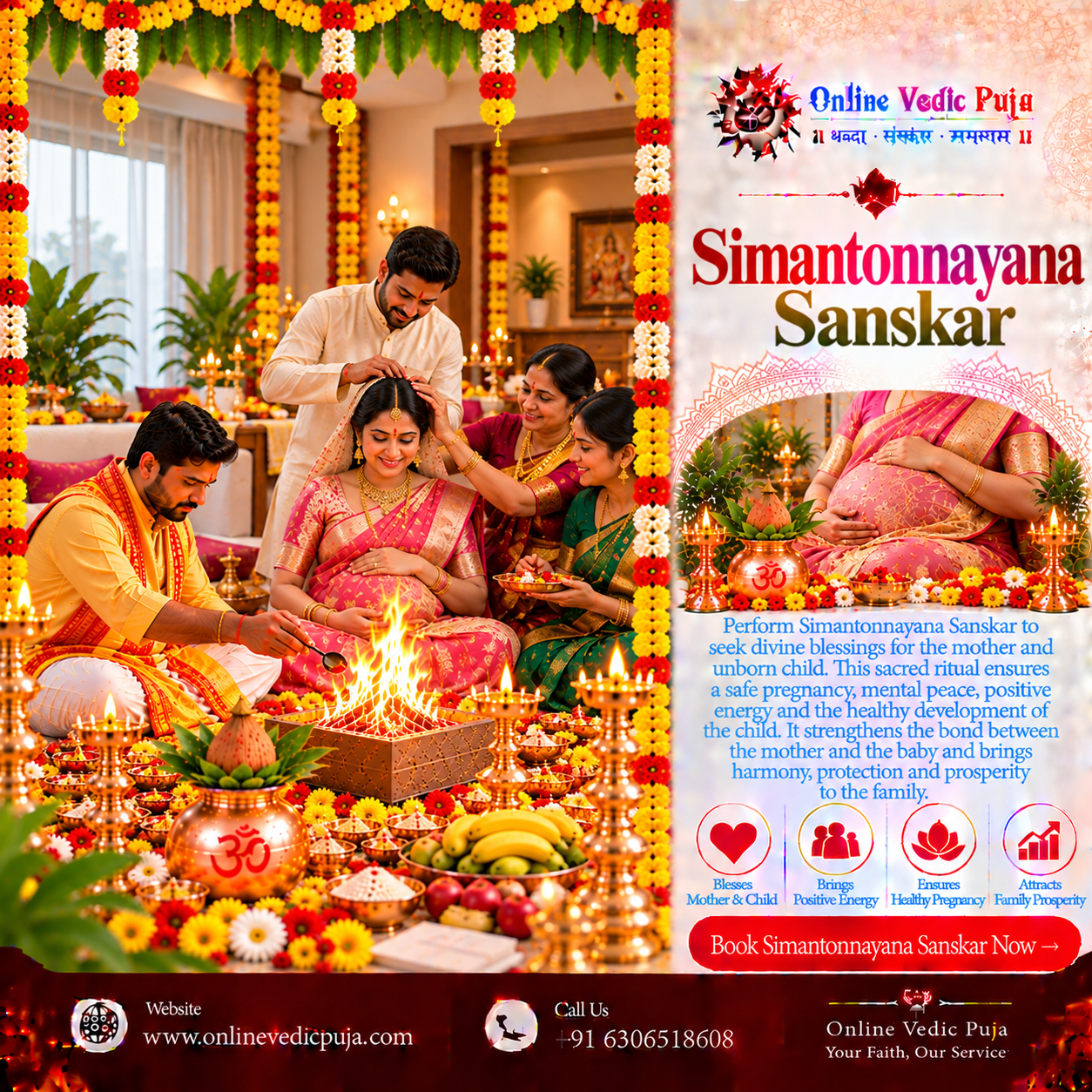

🙏 What Is Simantonnayana Sanskar?
Simantonnayana Sanskar is one of the traditional Hindu sixteen Sanskars and is associated with pregnancy and the well-being of the expectant mother. The word is traditionally connected with the parting of the hair, a symbolic gesture associated with care, blessings, and protection during this important stage of life.
The ceremony is performed according to family customs, regional traditions, and the guidance of a knowledgeable priest. It may include Vedic mantras, prayers to deities, Sankalp, offerings, and blessings from family members.
Simantonnayana Sanskar provides an opportunity for the family to express gratitude, support the expectant mother, and welcome the coming changes in family life with devotion and responsibility.
🪔 1. Spiritual and Cultural Significance
In Hindu tradition, pregnancy is considered an important phase that deserves care, respect, and family support. Simantonnayana Sanskar is traditionally associated with prayers for the mother’s well-being and the welfare of the developing child.
The ceremony emphasizes:
-
🙏 Seeking divine blessings for the mother and child.
-
🌸 Creating a peaceful and supportive family environment.
-
🕉️ Listening to Vedic mantras and traditional prayers.
-
❤️ Expressing love, encouragement, and respect for the expectant mother.
-
🌺 Preserving family traditions and cultural values.
The observance is a spiritual and cultural practice. It does not guarantee a particular pregnancy outcome or replace prenatal healthcare.
🕉️ 2. Ganesh Puja and Invocation
The ceremony may begin with the worship of Lord Ganesha, who is traditionally invoked before auspicious Hindu rituals. The priest performs the Puja according to the family’s customs and recites appropriate mantras.
Flowers, Akshat, Durva, incense, and a lit diya may be offered as part of the worship. Family members can join the prayers and seek blessings for a peaceful and meaningful ceremony.
This opening ritual establishes a devotional atmosphere and marks the beginning of the Sanskar.
🌿 3. Sankalp for Maternal and Family Well-Being
Sankalp is the formal expression of the intention behind a religious ceremony. The priest may guide the family in taking Sankalp for the well-being of the expectant mother, the developing child, and the household.
The family may offer prayers for:
-
Peace and harmony throughout pregnancy.
-
Strength, comfort, and emotional well-being for the mother.
-
A loving environment for the child’s arrival.
-
Patience and responsibility as the family prepares for parenthood.
-
Happiness and mutual support among family members.
This part of the ceremony allows the family to express its hopes and gratitude through a traditional spiritual practice.
4. Kalash Sthapana and Puja Preparation
Depending on the family’s tradition, Kalash Sthapana may be included in the ceremony. A Kalash containing clean water is placed at the worship area and treated as a sacred element of the Puja.
The priest may arrange flowers, Akshat, Roli, incense, and other customary materials while reciting purification mantras. The worship area is prepared with attention to cleanliness, comfort, and the family’s religious customs.
The arrangements should be convenient for the expectant mother, allowing her to sit comfortably and take breaks whenever needed.
🌺 5. The Traditional Simantonnayana Ritual
The central ritual of Simantonnayana Sanskar varies across traditions. In some customary practices, the parting of the expectant mother’s hair is performed symbolically as an expression of care and blessings. Other families follow a different regional or scriptural procedure.
Depending on the tradition, the ceremony may include:
-
Recitation of relevant Vedic mantras.
-
Worship of prescribed deities.
-
Symbolic rituals associated with maternal well-being.
-
Prayers for peace, happiness, and family harmony.
-
Blessings from elders and loved ones.
The exact ritual should be explained by the priest before the ceremony. Any physical gesture should be gentle, comfortable, and performed only with the mother’s consent.
🔥 6. Havan and Vedic Mantra Recitation
Some families include a Havan as part of Simantonnayana Sanskar. During the ritual, the priest recites traditional mantras and offers suitable Havan Samagri into the sacred fire.
Havan is traditionally associated with devotion, gratitude, and prayers for peace and well-being. Family members may participate in the prayers according to their customs.
Safety note: The Havan should be conducted in a well-ventilated area with appropriate fire precautions. Because smoke may cause discomfort during pregnancy, the expectant mother should remain away from smoke and excessive heat. If needed, the ceremony can be performed without a fire ritual.
❤️ 7. Blessings for the Expectant Mother
An important aspect of Simantonnayana Sanskar is honouring and supporting the expectant mother. Family members may offer flowers, traditional gifts, kind words, and blessings according to their customs.
The ceremony can become a meaningful opportunity to reassure the mother that she has the support of her family. Loved ones may express their wishes for a peaceful pregnancy and a happy transition into parenthood.
Her comfort and preferences should remain central to the celebration. She should never be expected to participate in a ritual that causes physical discomfort, stress, or unwanted attention.
👨👩👧 8. Family Gathering and Traditional Celebration
Simantonnayana Sanskar may be observed as a small family ceremony or a larger gathering, depending on regional customs and personal preferences. Some families combine religious worship with a traditional celebration for the expectant mother.
Possible elements include:
-
🌸 Decorating the Puja area with flowers.
-
🪔 Performing the customary worship and prayers.
-
🎁 Offering thoughtful gifts to the expectant mother.
-
🙏 Receiving blessings from elders and relatives.
-
🍬 Sharing Prasad and a family meal, where appropriate.
The celebration does not need to be elaborate or expensive. A simple gathering focused on care, respect, and togetherness can be equally meaningful.
🗓️ 9. Auspicious Muhurat for Simantonnayana Sanskar
Many families consult a Panchang or priest to select a suitable date and time for Simantonnayana Sanskar. The choice may depend on family traditions, regional practices, and the priest’s guidance.
The expectant mother’s health, comfort, medical appointments, and personal wishes should take priority when planning the ceremony. If a traditional Muhurat is inconvenient, the family can discuss a practical alternative with the priest.
A religious ceremony should be arranged in a way that minimizes unnecessary travel, fatigue, heat, and stress for the mother.
🪔 10. Simantonnayana Sanskar Puja Samagri
The materials required depend on the selected ritual and the family’s customs. Common items may include:
-
🪷 Fresh flowers and garlands.
-
🪔 Diya, cotton wicks, and suitable oil or ghee.
-
🌾 Akshat, Roli, and Kumkum.
-
🥥 Coconut and seasonal fruits.
-
💧 Clean water and a Kalash.
-
📿 Incense and other traditional Puja materials.
-
🍬 Sweets or Prasad.
-
🔥 Havan Kund and Havan Samagri, if Havan is included.
-
🌸 Optional traditional gifts or adornments for the expectant mother.
The priest can provide a final checklist based on the ceremony’s requirements. Avoid strong fragrances, smoke, or any substance that may be unsuitable during pregnancy.
🌿 11. The Importance of Peaceful Surroundings
Traditional pregnancy ceremonies often emphasize positive thoughts, loving relationships, and a peaceful environment. Families can reflect this intention by keeping the event comfortable and free from unnecessary pressure.
Helpful arrangements include:
-
Providing a comfortable chair and easy access to rest.
-
Keeping the room ventilated and avoiding excessive smoke.
-
Offering drinking water and suitable refreshments.
-
Limiting prolonged rituals if the mother feels tired.
-
Respecting the mother’s privacy and personal choices.
These practical considerations help make the ceremony more considerate and supportive.
🩺 12. Tradition Alongside Prenatal Care
Simantonnayana Sanskar is a religious and cultural observance, not a medical procedure. It should complement—not replace—appropriate prenatal check-ups, medical advice, prescribed supplements, or other care recommended by a qualified healthcare professional.
The ceremony should not be used to make promises about pregnancy outcomes or a child’s future. Its value lies in prayer, cultural continuity, family encouragement, and the opportunity to show care for the expectant mother.
Respectful participation, informed choices, and appropriate healthcare are essential throughout pregnancy.
🌺 Arrange Simantonnayana Sanskar with Vedic Puja
Vedic Puja can help families organize Simantonnayana Sanskar according to their religious traditions and preferences. Assistance may include priest coordination, guidance on customary Puja Samagri, mantra recitation, and planning a comfortable ceremony at home or another suitable location.
Our aim is to help families observe this meaningful Sanskar with devotion, dignity, and thoughtful arrangements, while keeping the expectant mother’s comfort and wishes at the centre of the occasion.
Vedic Puja — श्रद्धा • संस्कार • समाधान
सीमन्तोन्नयन संस्कार विवरण
🙏 सीमन्तोन्नयन संस्कार क्या है?
सीमन्तोन्नयन संस्कार हिंदू धर्म के सोलह पारंपरिक संस्कारों में से एक माना जाता है। यह गर्भावस्था से संबंधित एक महत्वपूर्ण धार्मिक संस्कार है, जिसका उद्देश्य गर्भवती माता के कल्याण, परिवार की मंगलकामनाओं और आने वाले शिशु के स्वागत के लिए प्रार्थना करना है।
परंपरागत रूप से सीमन्तोन्नयन शब्द का संबंध माता के बालों की माँग निकालने की प्रतीकात्मक क्रिया से जोड़ा जाता है। इस संस्कार में माता के प्रति प्रेम, सम्मान, देखभाल और शुभकामनाओं की भावना व्यक्त की जाती है।
संस्कार की विधि अलग-अलग क्षेत्रों, परिवारों और धार्मिक परंपराओं के अनुसार भिन्न हो सकती है। इसमें गणेश पूजन, संकल्प, वैदिक मंत्रोच्चार, देवी-देवताओं की पूजा और परिवार के बड़ों का आशीर्वाद शामिल हो सकता है।
यह अवसर परिवार को एक साथ आकर प्रार्थना करने, गर्भवती माता का सहयोग करने और आने वाले जीवन के प्रति अपनी जिम्मेदारियों को समझने का अवसर प्रदान करता है।
🪔 1. सीमन्तोन्नयन संस्कार का धार्मिक एवं सांस्कृतिक महत्व
हिंदू परंपरा में गर्भावस्था को जीवन का एक महत्वपूर्ण चरण माना जाता है। इस दौरान गर्भवती माता को शारीरिक आराम, भावनात्मक सहयोग, सम्मान और उचित देखभाल की आवश्यकता होती है। सीमन्तोन्नयन संस्कार इसी भाव को धार्मिक और सांस्कृतिक रूप में व्यक्त करने का माध्यम है।
इस संस्कार में परिवार पारंपरिक रूप से निम्नलिखित कामनाएँ करता है:
-
🙏 गर्भवती माता और गर्भस्थ शिशु के कल्याण की प्रार्थना।
-
🌸 घर में सुख, शांति और सकारात्मक वातावरण की कामना।
-
🕉️ वैदिक मंत्रों एवं पारंपरिक प्रार्थनाओं का श्रवण।
-
❤️ माता के प्रति प्रेम, सम्मान और सहयोग की भावना को मजबूत करना।
-
🌺 पारिवारिक संस्कारों और सांस्कृतिक परंपराओं का सम्मान करना।
यह संस्कार धार्मिक आस्था और पारिवारिक परंपरा से जुड़ा है। इससे गर्भावस्था के किसी विशेष परिणाम की गारंटी नहीं दी जा सकती और न ही यह चिकित्सकीय देखभाल का विकल्प है।
🕉️ 2. गणेश पूजन एवं मंगलाचरण
सीमन्तोन्नयन संस्कार की शुरुआत कई परिवारों में भगवान गणेश के पूजन से की जाती है। हिंदू धार्मिक परंपरा में शुभ कार्यों के आरंभ में गणेश जी का स्मरण और पूजन महत्वपूर्ण माना जाता है।
पुरोहित परिवार की परंपरा के अनुसार गणेश जी का आवाहन कर सकते हैं। पूजा में पुष्प, दूर्वा, अक्षत, धूप और दीप आदि सामग्री का उपयोग किया जा सकता है। मंत्रोच्चार के माध्यम से परिवार संस्कार के शांतिपूर्ण और मंगलमय आयोजन की प्रार्थना करता है।
गणेश पूजन के बाद मुख्य संस्कार की तैयारी की जाती है। इसकी विधि और मंत्र परिवार के रीति-रिवाजों तथा पुरोहित के मार्गदर्शन के अनुसार अलग-अलग हो सकते हैं।
🌿 3. संकल्प एवं माता के कल्याण की प्रार्थना
संकल्प धार्मिक अनुष्ठान का एक महत्वपूर्ण भाग होता है। इसमें पूजा का उद्देश्य व्यक्त किया जाता है और परिवार की ओर से मंगलकामनाएँ की जाती हैं। पुरोहित परंपरा के अनुसार संकल्प मंत्रों का उच्चारण करवा सकते हैं।
संकल्प के दौरान परिवार निम्नलिखित भावनाओं के साथ प्रार्थना कर सकता है:
-
गर्भवती माता के सुख, शांति और कल्याण की कामना।
-
गर्भावस्था के दौरान परिवार में प्रेम और सहयोग बनाए रखने का संकल्प।
-
आने वाले शिशु के स्वागत के लिए सकारात्मक वातावरण बनाने की प्रेरणा।
-
माता-पिता के रूप में धैर्य, समझदारी और जिम्मेदारी निभाने की प्रार्थना।
-
परिवार के सभी सदस्यों के बीच सद्भाव और आपसी सम्मान की कामना।
यह चरण परिवार को अपनी आशाओं, भावनाओं और जिम्मेदारियों को धार्मिक भावना के साथ व्यक्त करने का अवसर देता है।
4. कलश स्थापना एवं पूजा की तैयारी
परिवार की परंपरा के अनुसार सीमन्तोन्नयन संस्कार में कलश स्थापना भी की जा सकती है। स्वच्छ जल से भरे कलश को पूजा स्थल पर स्थापित किया जाता है और उससे संबंधित पारंपरिक मंत्रों का उच्चारण किया जा सकता है।
पूजा स्थल पर पुष्प, अक्षत, रोली, धूप, दीप और अन्य आवश्यक सामग्री व्यवस्थित की जाती है। पुरोहित परिवार के रीति-रिवाजों के अनुसार पूजा की तैयारी और शुद्धिकरण की प्रक्रिया पूरी करवाते हैं।
इस दौरान गर्भवती माता की सुविधा को प्राथमिकता देना चाहिए। उन्हें आरामदायक स्थान पर बैठने, पानी पीने और आवश्यकता पड़ने पर विश्राम करने की पूरी सुविधा मिलनी चाहिए।
🌺 5. सीमन्तोन्नयन संस्कार की पारंपरिक विधि
सीमन्तोन्नयन संस्कार की मुख्य विधि अलग-अलग धार्मिक परंपराओं में भिन्न हो सकती है। कुछ परंपराओं में गर्भवती माता के बालों की माँग निकालने की प्रतीकात्मक क्रिया की जाती है, जिसे देखभाल, स्नेह और आशीर्वाद से जोड़ा जाता है। कुछ परिवार अपनी क्षेत्रीय परंपरा के अनुसार अन्य विधियों का पालन करते हैं।
संस्कार में परंपरा के अनुसार निम्नलिखित क्रियाएँ शामिल हो सकती हैं:
-
वैदिक मंत्रों का उच्चारण।
-
निर्धारित देवी-देवताओं का पूजन।
-
माता के कल्याण के लिए विशेष प्रार्थना।
-
पारंपरिक प्रतीकात्मक क्रियाएँ।
-
परिवार के बड़ों और रिश्तेदारों द्वारा मंगलकामनाएँ।
-
अंत में शांति प्रार्थना और प्रसाद वितरण।
संस्कार की विधि पहले से पुरोहित से समझ लेना उचित रहता है। माता के बालों की माँग निकालने या किसी अन्य शारीरिक क्रिया में उनकी सहमति और सहजता का पूरा ध्यान रखना चाहिए।
🔥 6. हवन एवं वैदिक मंत्रोच्चार
कुछ परिवार सीमन्तोन्नयन संस्कार के साथ हवन भी करवाते हैं। इसमें पुरोहित पारंपरिक मंत्रों का उच्चारण करते हुए निर्धारित हवन सामग्री अग्नि में अर्पित करते हैं।
हवन को हिंदू परंपरा में श्रद्धा, समर्पण, प्रार्थना और शांति की भावना से जोड़ा जाता है। परिवार के सदस्य अपनी परंपरा के अनुसार मंत्रों का श्रवण कर सकते हैं और माता तथा परिवार के कल्याण की कामना कर सकते हैं।
सुरक्षा का ध्यान रखें: हवन खुले और अच्छी तरह हवादार स्थान पर किया जाना चाहिए। गर्भवती माता को धुएँ और अत्यधिक गर्मी से दूर रखें। यदि धुएँ से परेशानी होने की आशंका हो, तो बिना हवन के मंत्रोच्चार और प्रार्थना के साथ संस्कार आयोजित किया जा सकता है।
❤️ 7. गर्भवती माता का सम्मान एवं आशीर्वाद
सीमन्तोन्नयन संस्कार का एक महत्वपूर्ण भाव गर्भवती माता को परिवार के प्रेम, सम्मान और सहयोग का अनुभव कराना है। इस अवसर पर परिवार के सदस्य अपनी शुभकामनाएँ व्यक्त कर सकते हैं और उन्हें आने वाले समय के लिए प्रोत्साहित कर सकते हैं।
माता को फूल, पारंपरिक उपहार या अन्य वस्तुएँ देना परिवार की रीति के अनुसार शामिल किया जा सकता है। सबसे महत्वपूर्ण यह है कि माता को सहजता, सम्मान और भावनात्मक सुरक्षा का अनुभव हो।
परिवार को गर्भावस्था के दौरान आराम, पौष्टिक भोजन, पर्याप्त नींद और नियमित स्वास्थ्य जाँच के महत्व को भी समझना चाहिए। माता की इच्छा के विरुद्ध कोई धार्मिक क्रिया या सामाजिक गतिविधि नहीं कराई जानी चाहिए।
👨👩👧 8. पारिवारिक आयोजन एवं पारंपरिक उत्सव
सीमन्तोन्नयन संस्कार घर पर या किसी उपयुक्त स्थान पर आयोजित किया जा सकता है। कुछ परिवार इसे सीमित सदस्यों के साथ शांतिपूर्वक संपन्न करते हैं, जबकि कुछ परिवार अपनी क्षेत्रीय परंपरा के अनुसार इसे पारिवारिक उत्सव का रूप देते हैं।
आयोजन में निम्नलिखित गतिविधियाँ शामिल हो सकती हैं:
-
🌸 पूजा स्थल को फूलों से सजाना।
-
🪔 पारंपरिक पूजा और मंत्रोच्चार करना।
-
🎁 गर्भवती माता को शुभकामनाएँ और उपहार देना।
-
🙏 परिवार के बड़ों से आशीर्वाद प्राप्त करना।
-
🍬 प्रसाद वितरण और पारिवारिक भोजन की व्यवस्था करना।
संस्कार के लिए बहुत अधिक खर्च करना आवश्यक नहीं है। परिवार का प्रेम, सम्मान, श्रद्धा और सहयोग ही इस अवसर को सार्थक बनाते हैं।
🗓️ 9. सीमन्तोन्नयन संस्कार का शुभ मुहूर्त
कई परिवार सीमन्तोन्नयन संस्कार के लिए पंचांग और पुरोहित की सहायता से शुभ तिथि एवं मुहूर्त का चयन करते हैं। मुहूर्त का निर्धारण परिवार की धार्मिक परंपरा, क्षेत्रीय रीति-रिवाजों और पुरोहित के मार्गदर्शन के अनुसार किया जा सकता है।
हालाँकि, गर्भवती माता का स्वास्थ्य, आराम, चिकित्सकीय अपॉइंटमेंट और व्यक्तिगत इच्छा सबसे महत्वपूर्ण हैं। यदि पारंपरिक मुहूर्त पर आयोजन करना सुविधाजनक न हो, तो परिवार अपनी परिस्थिति के अनुसार दूसरा समय चुन सकता है।
आयोजन की योजना बनाते समय लंबी यात्रा, अत्यधिक गर्मी, थकान, भीड़ और अनावश्यक तनाव से बचने का प्रयास करना चाहिए।
🪔 10. सीमन्तोन्नयन संस्कार की पूजा सामग्री
पूजा सामग्री संस्कार की विधि और परिवार की परंपरा के अनुसार बदल सकती है। सामान्य रूप से निम्नलिखित वस्तुओं की आवश्यकता हो सकती है:
-
🪷 ताजे फूल और फूलों की माला।
-
🪔 दीपक, रुई की बत्ती और उपयुक्त तेल या घी।
-
🌾 अक्षत, रोली और कुमकुम।
-
🥥 नारियल एवं मौसमी फल।
-
💧 स्वच्छ जल और कलश।
-
📿 धूप और अन्य पारंपरिक पूजा सामग्री।
-
🍬 मिठाई या प्रसाद।
-
🔥 हवन कुंड एवं हवन सामग्री, यदि हवन कराया जाना हो।
-
🌸 माता के लिए पारंपरिक उपहार या श्रृंगार सामग्री, यदि परिवार की परंपरा में शामिल हो।
संस्कार से पहले पुरोहित से आवश्यक सामग्री की सूची प्राप्त कर लेना उचित रहता है। गर्भवती माता को तेज सुगंध, धुएँ या किसी असुविधाजनक सामग्री के संपर्क में लाने से बचें।
🌿 11. शांतिपूर्ण वातावरण का महत्व
गर्भावस्था से जुड़े पारंपरिक संस्कारों में सकारात्मक वातावरण, परिवार का सहयोग और माता के प्रति स्नेह को महत्वपूर्ण माना जाता है। आयोजन की व्यवस्था भी इसी भावना के अनुरूप होनी चाहिए।
इसके लिए कुछ बातों का ध्यान रखा जा सकता है:
-
माता के बैठने के लिए आरामदायक कुर्सी या स्थान रखें।
-
पर्याप्त हवा और पीने के पानी की व्यवस्था करें।
-
हवन के धुएँ और अत्यधिक गर्मी से बचाव करें।
-
माता की थकान को ध्यान में रखते हुए पूजा की अवधि तय करें।
-
माता की निजता, इच्छा और व्यक्तिगत सीमाओं का सम्मान करें।
इन छोटी-छोटी व्यवस्थाओं से संस्कार अधिक सहज, सुरक्षित और परिवार के लिए यादगार बन सकता है।
🩺 12. धार्मिक परंपरा के साथ स्वास्थ्य की देखभाल
सीमन्तोन्नयन संस्कार एक धार्मिक एवं सांस्कृतिक आयोजन है, चिकित्सा प्रक्रिया नहीं। गर्भावस्था के दौरान नियमित चिकित्सकीय जाँच, डॉक्टर की सलाह, निर्धारित दवाओं या सप्लीमेंट्स और उचित स्वास्थ्य देखभाल का पालन करना आवश्यक है।
किसी भी धार्मिक अनुष्ठान से गर्भावस्था के परिणाम या शिशु के भविष्य की गारंटी नहीं दी जा सकती। संस्कार का वास्तविक उद्देश्य प्रार्थना, पारिवारिक सहयोग, सांस्कृतिक परंपरा और गर्भवती माता के प्रति सम्मान की भावना को मजबूत करना है।
परिवार को माता की सहमति, सुविधा और स्वास्थ्य को प्राथमिकता देते हुए धार्मिक आस्था और जिम्मेदार देखभाल के बीच संतुलन बनाए रखना चाहिए।
🌺 Vedic Puja के साथ सीमन्तोन्नयन संस्कार का आयोजन करें
Vedic Puja आपके परिवार की धार्मिक परंपरा और आवश्यकताओं के अनुसार सीमन्तोन्नयन संस्कार के आयोजन में सहायता कर सकता है। पुरोहित समन्वय, पारंपरिक पूजा सामग्री की जानकारी, वैदिक मंत्रोच्चार और पूजा की व्यवस्था के लिए मार्गदर्शन प्राप्त किया जा सकता है।
हमारा उद्देश्य इस महत्वपूर्ण पारिवारिक अवसर को श्रद्धा, सम्मान, शांति और सांस्कृतिक मूल्यों के साथ संपन्न करने में सहयोग देना है। आयोजन के प्रत्येक चरण में गर्भवती माता की सुविधा, इच्छा और स्वास्थ्य का ध्यान रखना प्राथमिकता होनी चाहिए।
Vedic Puja — श्रद्धा • संस्कार • समाधान


Reviews
There are no reviews yet.