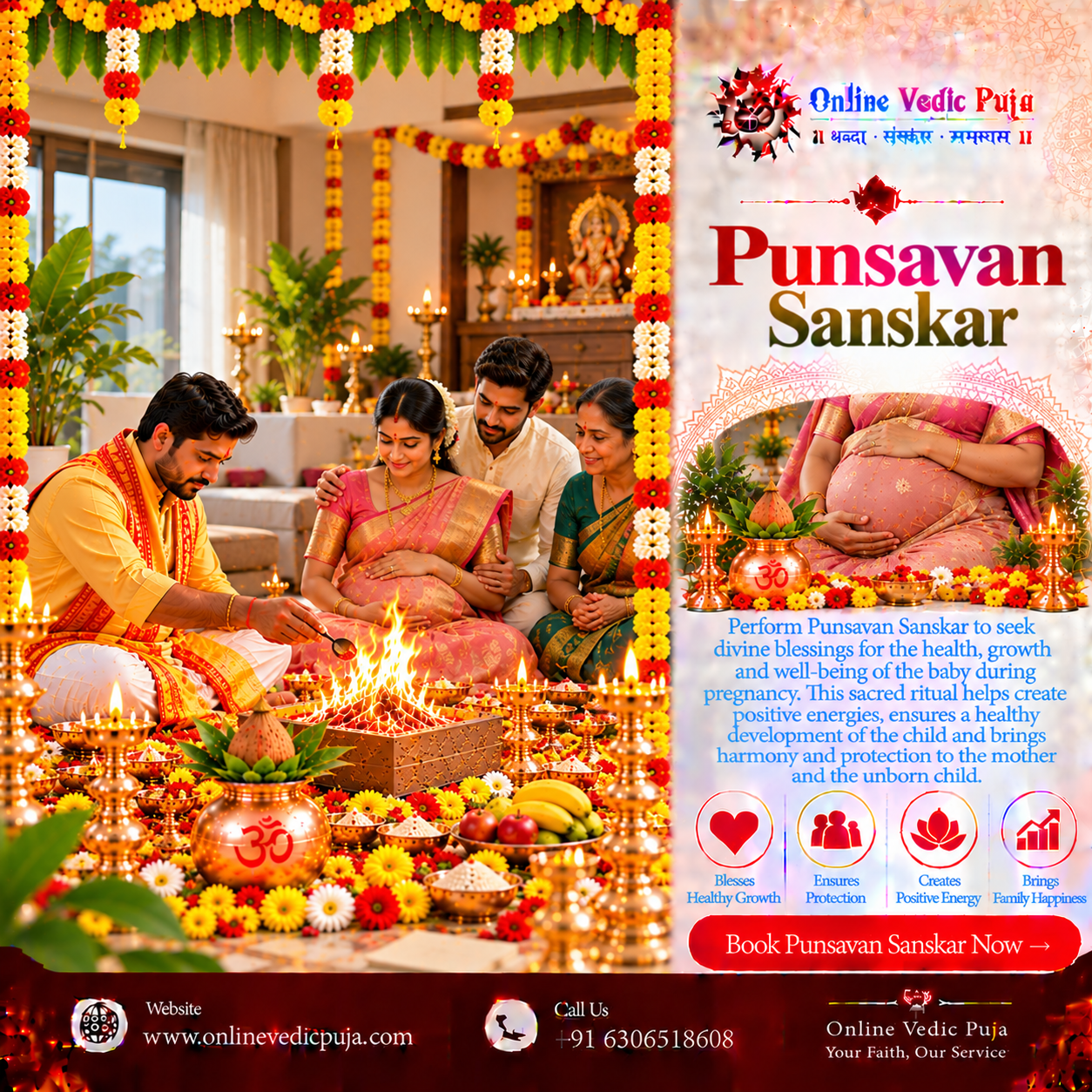
🙏 What Is Punsavan Sanskar?
Punsavan Sanskar is a traditional Hindu prenatal ceremony associated with the period of pregnancy. It is counted among the sixteen Sanskars described in Hindu tradition, which mark important stages of human life through prayers, rituals, and spiritual observances.
The ceremony is performed with the intention of praying for the well-being of the expectant mother and the developing child. Families observe it according to their religious beliefs, regional customs, family traditions, and the guidance of a knowledgeable priest.
Punsavan Sanskar is an occasion to seek divine blessings, cultivate positive thoughts, and welcome this important phase of family life with devotion and responsibility.
🪔 1. Spiritual Significance of Punsavan Sanskar
In Hindu tradition, pregnancy is regarded as a significant stage that calls for care, prayer, and family support. Punsavan Sanskar provides a structured opportunity for relatives to come together and offer blessings for a peaceful pregnancy and a healthy family environment.
The ceremony traditionally emphasizes:
-
🙏 Prayers for the well-being of the mother and developing child.
-
🌼 Seeking divine grace and peace for the family.
-
🕉️ Recitation of Vedic mantras and sacred prayers.
-
❤️ Encouraging affection, emotional support, and positive family relationships.
-
🌺 Honouring the cultural and spiritual traditions associated with pregnancy.
The ceremony is a spiritual and cultural practice. It does not guarantee any particular pregnancy outcome or determine a child’s sex, health, or future.
🕉️ 2. Ganesh Puja and Invocation
The ceremony may begin with Ganesh Puja, seeking blessings for an auspicious and peaceful observance. Lord Ganesha is traditionally worshipped before many Hindu religious ceremonies.
The priest may offer flowers, Akshat, Durva, incense, and other customary offerings while reciting appropriate mantras. The family joins in prayer and seeks blessings for the smooth completion of the Sanskar.
The precise procedure may vary according to the family’s tradition and the priest’s guidance.
🌿 3. Sankalp and Prayer for the Family
Sankalp is the formal declaration of the intention behind the ceremony. The priest may guide the family in stating the purpose of the Sanskar, identifying the worshippers, and offering prayers for the expectant mother’s well-being and the child’s welfare.
The family may pray for:
-
Peace and harmony in the household.
-
Strength, comfort, and emotional well-being for the mother.
-
A supportive environment throughout pregnancy.
-
Wisdom and responsibility as the family prepares for parenthood.
This moment allows the family to express its hopes and gratitude through a meaningful spiritual observance.
4. Kalash Sthapana and Purification
Depending on the family’s customs, the ceremony may include Kalash Sthapana, in which a sacred water vessel is established as part of the worship.
The priest may recite purification mantras and arrange customary offerings such as flowers, water, Akshat, and sacred leaves where appropriate. The purpose is to create a clean, respectful, and devotional setting for the ritual.
The arrangements should be simple and comfortable, particularly for the expectant mother. There is no need to expose her to smoke, strenuous activity, or uncomfortable ritual postures.
📿 5. Punsavan Sanskar Rituals
The specific rites associated with Punsavan Sanskar differ across Hindu traditions and regional practices. A qualified priest can explain the customary procedure followed by the family and adapt the observance appropriately.
Depending on the tradition, the ceremony may include:
-
Recitation of relevant Vedic mantras.
-
Worship of prescribed deities.
-
Offerings and prayers for maternal and child well-being.
-
Family blessings and devotional recitations.
-
A concluding prayer for peace and prosperity.
Historical descriptions of the Sanskar may include practices that are not suitable or medically recommended today. Any ritual involving the consumption, application, or administration of a substance during pregnancy should be reviewed with a qualified healthcare professional. No ritual substance should replace prescribed medical care.
🔥 6. Havan and Vedic Mantra Recitation
Some families include a small Havan as part of Punsavan Sanskar. The priest offers customary Havan Samagri into the sacred fire while reciting appropriate mantras and prayers.
The Havan is traditionally associated with devotion, purification, gratitude, and prayers for family welfare.
Safety considerations: Keep the Havan area well ventilated, use a stable fire-safe setup, and ensure that smoke does not cause discomfort to the expectant mother. A no-fire prayer ceremony may be chosen if smoke, heat, space, or health considerations make a Havan unsuitable.
🌸 7. Blessings for the Expectant Mother
A central part of the observance is offering loving support and blessings to the expectant mother. Family members may express their good wishes through prayers, flowers, respectful gestures, and words of encouragement.
The ceremony can help reinforce the importance of compassion, patience, and shared responsibility during pregnancy. It is also an opportunity to remind the family that emotional support, nutritious food, rest, and appropriate medical care are important throughout this period.
Participation should always be comfortable and voluntary for the mother.
🗓️ 8. Auspicious Muhurat for Punsavan Sanskar
Some families consult a priest or Panchang to select an auspicious date and time for Punsavan Sanskar. The selection may depend on the family’s religious tradition, regional customs, and the priest’s interpretation of the Panchang.
When arranging the ceremony, the mother’s comfort, medical appointments, and healthcare guidance should take priority over a particular date or time. If a traditional Muhurat is not practical, families can choose another convenient time for prayer.
🪔 9. Punsavan Sanskar Puja Samagri
The required materials vary according to the chosen ritual. Commonly used items may include:
-
🪷 Flowers and flower garlands.
-
🪔 Diya, cotton wicks, and suitable oil or ghee.
-
🌾 Akshat (unbroken rice) and Roli or Kumkum.
-
🥥 Coconut and seasonal fruits.
-
💧 Clean water and a Kalash.
-
📿 Incense and other customary worship materials.
-
🍬 Sweets or Prasad.
-
🔥 Havan Samagri and a suitable Havan Kund, if Havan is included.
The priest can provide a final list according to the family’s customs. Avoid any ingredient or ritual substance that may be unsafe during pregnancy.
👨👩👧 10. Family Participation and Ceremony Arrangements
Punsavan Sanskar can be performed at home or at another suitable location. The arrangement should allow the expectant mother to sit comfortably, take breaks, and remain away from excessive heat, smoke, crowding, and noise.
Family members may participate in the prayers, listen to the mantras, offer flowers, and share blessings. If relatives cannot attend in person, the family may arrange remote participation where practical.
The ceremony can be simple and intimate; elaborate decorations or expensive materials are not essential to its spiritual purpose.
❤️ 11. Tradition, Care, and Responsible Parenthood
Punsavan Sanskar reflects a traditional approach to marking pregnancy through religious observance and family involvement. Its meaningful modern practice combines devotion with respect for the mother’s wishes, privacy, comfort, and healthcare needs.
The ritual should never be used to pressure a pregnant person, promote discrimination based on a child’s sex, or suggest that religious observances can replace prenatal check-ups or medical advice.
Families can honour their traditions while ensuring that decisions about pregnancy and healthcare are made responsibly and with appropriate professional guidance.
🌺 Arrange Punsavan Sanskar with Vedic Puja
Vedic Puja can help families plan a respectful Punsavan Sanskar according to their religious customs, preferred ceremony format, and available arrangements. From priest coordination and traditional mantra recitation to guidance on Puja Samagri, the ceremony can be organized with attention to devotion, comfort, and family participation.
Vedic Puja — श्रद्धा • संस्कार • समाधान
पुंसवन संस्कार विवरण
🙏 पुंसवन संस्कार क्या है?
पुंसवन संस्कार हिंदू धर्म के सोलह पारंपरिक संस्कारों में से एक माना जाता है। यह गर्भावस्था के दौरान किया जाने वाला एक धार्मिक संस्कार है, जिसमें गर्भवती माता और गर्भस्थ शिशु के कल्याण के लिए प्रार्थना की जाती है। इस अवसर पर परिवार के सदस्य ईश्वर से सुख, शांति और मंगल की कामना करते हैं।
यह संस्कार परिवार की धार्मिक मान्यताओं, क्षेत्रीय परंपराओं और कुलाचार के अनुसार संपन्न किया जा सकता है। इसमें वैदिक मंत्रों का उच्चारण, संकल्प, देवी-देवताओं की पूजा तथा परिवार के बड़ों का आशीर्वाद शामिल हो सकता है।
पुंसवन संस्कार का उद्देश्य गर्भावस्था के इस महत्वपूर्ण चरण को श्रद्धा, सकारात्मक सोच और पारिवारिक सहयोग के साथ मनाना है।
🪔 1. पुंसवन संस्कार का धार्मिक महत्व
हिंदू परंपरा में गर्भावस्था को जीवन का एक महत्वपूर्ण चरण माना गया है। इस समय माता को प्रेम, देखभाल, आराम और भावनात्मक सहयोग देना विशेष रूप से महत्वपूर्ण है। पुंसवन संस्कार परिवार को एक साथ बैठकर प्रार्थना करने और आने वाले जीवन के प्रति अपनी जिम्मेदारियों को समझने का अवसर प्रदान करता है।
इस संस्कार के माध्यम से परिवार पारंपरिक रूप से निम्नलिखित कामनाएँ करता है:
-
🙏 गर्भवती माता और गर्भस्थ शिशु के कल्याण की प्रार्थना।
-
🌼 परिवार में सुख, शांति और सकारात्मक वातावरण की कामना।
-
🕉️ वैदिक मंत्रों और धार्मिक प्रार्थनाओं का श्रवण।
-
❤️ माता के प्रति प्रेम, सम्मान और सहयोग की भावना को मजबूत करना।
-
🌺 पारिवारिक संस्कारों और धार्मिक परंपराओं का सम्मान करना।
यह एक धार्मिक एवं सांस्कृतिक अनुष्ठान है। इससे गर्भावस्था के किसी विशेष परिणाम, शिशु के स्वास्थ्य या उसके भविष्य की गारंटी नहीं दी जा सकती।
🕉️ 2. गणेश पूजन एवं मंगलाचरण
पुंसवन संस्कार की शुरुआत कई परिवारों में भगवान गणेश की पूजा से की जाती है। हिंदू परंपरा में किसी भी शुभ कार्य के आरंभ में गणेश पूजन का विशेष महत्व माना जाता है।
पूजा के दौरान पुरोहित भगवान गणेश का आवाहन कर सकते हैं। पुष्प, दूर्वा, अक्षत, धूप और दीप आदि पारंपरिक सामग्री से पूजा की जाती है तथा मंगलमय वातावरण के लिए मंत्रों का उच्चारण किया जाता है।
इस चरण में परिवार संस्कार के शांतिपूर्ण और व्यवस्थित रूप से संपन्न होने की प्रार्थना करता है। पूजा की वास्तविक विधि परिवार की परंपरा और पुरोहित के मार्गदर्शन के अनुसार अलग-अलग हो सकती है।
🌿 3. संकल्प एवं परिवार के कल्याण की प्रार्थना
संकल्प किसी भी धार्मिक अनुष्ठान का महत्वपूर्ण भाग होता है। इसमें पूजा करने वाले परिवार की ओर से संस्कार का उद्देश्य व्यक्त किया जाता है। पुरोहित परिवार की परंपरा के अनुसार संकल्प मंत्रों का उच्चारण करवा सकते हैं।
संकल्प के समय परिवार निम्नलिखित भावनाओं के साथ प्रार्थना कर सकता है:
-
गर्भवती माता के सुख और कल्याण की कामना।
-
गर्भावस्था के दौरान परिवार में शांति और सहयोग बनाए रखने की प्रार्थना।
-
आने वाले शिशु के स्वागत के लिए सकारात्मक वातावरण बनाने का संकल्प।
-
माता-पिता के रूप में प्रेम, धैर्य और जिम्मेदारी निभाने की प्रेरणा।
यह चरण परिवार को अपनी भावनाओं, आशाओं और जिम्मेदारियों को धार्मिक भावना के साथ व्यक्त करने का अवसर देता है।
🪷 4. कलश स्थापना एवं शुद्धिकरण
परिवार की परंपरा के अनुसार पुंसवन संस्कार में कलश स्थापना भी की जा सकती है। कलश को पूजा स्थल पर स्थापित कर उससे संबंधित मंत्रों और प्रार्थनाओं का पाठ किया जाता है।
पूजा में स्वच्छ जल, पुष्प, अक्षत, रोली और अन्य पारंपरिक सामग्री का उपयोग हो सकता है। पूजा स्थल को साफ-सुथरा और शांत रखा जाता है, ताकि सभी लोग सहजता से अनुष्ठान में भाग ले सकें।
गर्भवती माता की सुविधा का विशेष ध्यान रखना चाहिए। उन्हें लंबे समय तक एक ही स्थिति में बैठने, अधिक गर्मी सहने या धुएँ के संपर्क में रहने के लिए बाध्य नहीं करना चाहिए।
📿 5. पुंसवन संस्कार की पारंपरिक विधि
पुंसवन संस्कार की विधि अलग-अलग क्षेत्रों, परिवारों और धार्मिक परंपराओं में भिन्न हो सकती है। इसलिए संस्कार से पहले पुरोहित से विधि, मंत्रों और आवश्यक सामग्री के बारे में जानकारी लेना उचित रहता है।
परंपरा के अनुसार अनुष्ठान में निम्नलिखित चरण शामिल हो सकते हैं:
-
वैदिक मंत्रों का उच्चारण।
-
निर्धारित देवी-देवताओं का पूजन।
-
माता और गर्भस्थ शिशु के कल्याण के लिए प्रार्थना।
-
पुष्प, अक्षत और अन्य पारंपरिक सामग्री से पूजा।
-
परिवार के सदस्यों द्वारा मंगलकामनाएँ और आशीर्वाद।
-
अंत में शांति प्रार्थना और प्रसाद वितरण।
पुराने धार्मिक विवरणों में कुछ ऐसी क्रियाओं का उल्लेख मिलता है जिनमें किसी पदार्थ का सेवन या उपयोग कराया जाता था। गर्भावस्था में किसी भी पदार्थ को खाने, पिलाने या शरीर पर लगाने से पहले योग्य स्वास्थ्य विशेषज्ञ की सलाह लेना आवश्यक है। कोई भी पारंपरिक क्रिया चिकित्सकीय देखभाल का विकल्प नहीं है।
🔥 6. हवन एवं वैदिक मंत्रोच्चार
कुछ परिवार पुंसवन संस्कार के साथ हवन भी करवाते हैं। इसमें पुरोहित पारंपरिक मंत्रों का उच्चारण करते हुए निर्धारित हवन सामग्री अग्नि में अर्पित करते हैं।
हवन को धार्मिक परंपरा में श्रद्धा, समर्पण, शांति और मंगलकामना से जोड़ा जाता है। परिवार के सदस्य प्रार्थना में सम्मिलित होकर माता और परिवार के कल्याण की कामना कर सकते हैं।
सुरक्षा का ध्यान रखें: हवन खुले और अच्छी तरह हवादार स्थान पर करें। गर्भवती माता को धुएँ, अत्यधिक गर्मी और भीड़ से दूर आरामदायक स्थान पर बैठने की सुविधा दें। यदि धुआँ या अग्नि स्वास्थ्य अथवा स्थान की दृष्टि से उपयुक्त न हो, तो बिना हवन के मंत्र-जप और प्रार्थना के साथ भी संस्कार आयोजित किया जा सकता है।
🌸 7. गर्भवती माता का आशीर्वाद एवं सम्मान
पुंसवन संस्कार में गर्भवती माता को परिवार के प्रेम, सम्मान और सहयोग का अनुभव कराना महत्वपूर्ण है। परिवार के सदस्य उनके प्रति अपनी शुभकामनाएँ व्यक्त कर सकते हैं और उन्हें आने वाले समय के लिए भावनात्मक सहयोग देने का संकल्प ले सकते हैं।
इस अवसर पर माता के आराम, भोजन, नींद, मानसिक शांति और नियमित स्वास्थ्य जाँच के महत्व को भी समझना चाहिए। परिवार का सकारात्मक सहयोग गर्भावस्था के दौरान एक सहायक वातावरण बनाने में महत्वपूर्ण भूमिका निभाता है।
पूजा में माता की भागीदारी उनकी इच्छा और सुविधा के अनुसार ही होनी चाहिए।
🗓️ 8. पुंसवन संस्कार का शुभ मुहूर्त
कई परिवार पुंसवन संस्कार के लिए पंचांग और पुरोहित के मार्गदर्शन से शुभ तिथि एवं मुहूर्त का चयन करते हैं। मुहूर्त का निर्धारण परिवार की परंपरा, क्षेत्रीय रीति-रिवाजों और पुरोहित की सलाह के अनुसार किया जा सकता है।
हालाँकि, गर्भवती माता की सुविधा, चिकित्सकीय अपॉइंटमेंट और स्वास्थ्य संबंधी सलाह को प्राथमिकता देना आवश्यक है। यदि किसी विशेष मुहूर्त पर संस्कार करना व्यावहारिक न हो, तो परिवार अपनी सुविधा के अनुसार दूसरे समय पर प्रार्थना कर सकता है।
धार्मिक आयोजन ऐसा होना चाहिए जिससे माता को अनावश्यक तनाव या शारीरिक असुविधा न हो।
🪔 9. पुंसवन संस्कार की पूजा सामग्री
पूजा सामग्री संस्कार की विधि और पारिवारिक परंपरा के अनुसार बदल सकती है। सामान्य रूप से निम्नलिखित सामग्री की आवश्यकता हो सकती है:
-
🪷 ताजे फूल एवं फूलों की माला।
-
🪔 दीपक, रुई की बत्ती और उपयुक्त तेल या घी।
-
🌾 अक्षत, रोली या कुमकुम।
-
🥥 नारियल एवं मौसमी फल।
-
💧 स्वच्छ जल और कलश।
-
📿 धूप तथा अन्य पारंपरिक पूजा सामग्री।
-
🍬 मिठाई या प्रसाद।
-
🔥 हवन सामग्री और हवन कुंड, यदि हवन कराया जाना हो।
संस्कार से पहले पुरोहित से सामग्री की अंतिम सूची प्राप्त कर लेना अच्छा रहता है। गर्भावस्था में किसी भी ऐसी सामग्री का उपयोग न करें जो माता के लिए असुरक्षित हो सकती है।
👨👩👧 10. परिवार की भागीदारी एवं आयोजन व्यवस्था
पुंसवन संस्कार घर पर या किसी उपयुक्त धार्मिक स्थान पर आयोजित किया जा सकता है। पूजा स्थल साफ, शांत और आरामदायक होना चाहिए। गर्भवती माता के बैठने, आराम करने और आवश्यकता पड़ने पर बीच में विश्राम लेने की पर्याप्त व्यवस्था होनी चाहिए।
परिवार के सदस्य मंत्रों का श्रवण कर सकते हैं, पुष्प अर्पित कर सकते हैं और माता के लिए मंगलकामनाएँ व्यक्त कर सकते हैं। जो रिश्तेदार दूर रहते हैं, वे चाहें तो सुविधानुसार ऑनलाइन माध्यम से भी प्रार्थना में शामिल हो सकते हैं।
इस संस्कार के लिए भव्य सजावट या महँगी सामग्री आवश्यक नहीं है। श्रद्धा, सम्मान और परिवार का सहयोग ही आयोजन का मुख्य भाव है।
❤️ 11. परंपरा के साथ स्वास्थ्य और जिम्मेदारी
पुंसवन संस्कार भारतीय धार्मिक और सांस्कृतिक परंपरा में गर्भावस्था के महत्वपूर्ण चरण को सम्मान देने का माध्यम है। आधुनिक समय में इस संस्कार को माता की इच्छा, स्वास्थ्य, निजता और आराम का सम्मान करते हुए आयोजित करना चाहिए।
किसी भी धार्मिक क्रिया के आधार पर गर्भावस्था के परिणाम की गारंटी नहीं दी जा सकती। यह संस्कार शिशु के लिंग का निर्धारण नहीं करता और न ही चिकित्सा जाँच या डॉक्टर की सलाह का विकल्प है।
परिवार को गर्भावस्था के दौरान नियमित चिकित्सकीय देखभाल, संतुलित आहार, पर्याप्त आराम और स्वास्थ्य विशेषज्ञ के निर्देशों का पालन करना चाहिए। धार्मिक आस्था और जिम्मेदार स्वास्थ्य देखभाल एक-दूसरे के पूरक हो सकते हैं।
🌺 Vedic Puja के साथ पुंसवन संस्कार का आयोजन करें
Vedic Puja आपके परिवार की धार्मिक परंपराओं और आवश्यकताओं के अनुसार पुंसवन संस्कार के आयोजन में सहायता कर सकता है। पुरोहित समन्वय, पारंपरिक मंत्रोच्चार, पूजा सामग्री की जानकारी और अनुष्ठान की व्यवस्था को सरल बनाने के लिए मार्गदर्शन प्राप्त किया जा सकता है।
हमारा प्रयास है कि यह पवित्र अवसर श्रद्धा, शांति, पारिवारिक सहयोग और सांस्कृतिक मूल्यों के साथ संपन्न हो। संस्कार की प्रत्येक व्यवस्था में गर्भवती माता की सुविधा और स्वास्थ्य का ध्यान रखना प्राथमिकता होनी चाहिए।
Vedic Puja — श्रद्धा • संस्कार • समाधान
Reviews
There are no reviews yet.